


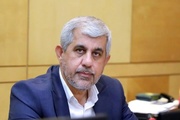
Addressing UNESCO’s 2026 Global Forum on the Ethics of Artificial Intelligence (GFEAI 2026) in Riyadh on Wednesday, Hossein Simaee Sarraf stressed that technology is not neutral and warned that AI could be used as a means of oppression.
“Artificial intelligence does not act fairly by itself,” Simaee remarked, adding that algorithms can sometimes destroy more than they create and platforms can become sources of harm instead of development.
He also cautioned that even surveillance must have limits, noting that greater oversight of governments and those in power is desirable, but monitoring ordinary citizens’ behavior, relationships and intentions could create an “invisible dictatorship.”
“Today, data is being used in actions that violate human rights and even lead to the killing of children,” the minister noted, questioning whether AI platforms and technology developers should bear responsibility for how their systems are used.
Simaee pointed out that AI can also be used “to identify and precisely target human beings with missiles,” raising serious ethical questions over its military applications.
Referring to the attack on a school in southern Iran by the US using AI, which resulted in the martyrdom of 168 students and teachers, Simaee highlighted that the issue required deep consideration and urgent solutions.
The minister further cautioned that AI could widen existing inequalities, noting that an ethical framework should not only prevent harm but also guarantee equal access to the technology.
“Technology must serve humanity, and artificial intelligence must expand human freedom, rather than restrict it,” Simaee stressed, calling on developing countries to build AI systems suited to their own languages and cultures.
According to Press TV, his warnings come as AI-assisted warfare has increasingly featured in Tel Aviv and Washington’s military operations.
Investigations suggest that Israel has extensively used digital tools Lavender and the Gospel to identify and target Palestinians in Gaza, where the regime has killed more than 73,000 people and wounded 173,000 others.
Reports have also linked AI-assisted surveillance and targeting technologies to the regime’s military aggression in Lebanon, where its forces have killed 4,383 people and wounded 12,406 others.
Furthermore, during the US-Israeli aggression against Iran, several AI platforms developed by major technology companies, including Microsoft, Apple and Amazon, were combined with satellite imagery, radar, drone and communications data to create a battlefield picture and support targeting decisions.
He underscored that the region’s most important priority is now an end to unilateral coercive measures and the establishment of peace, describing sanctions as “unethical” and peace and security as an ethical necessity.
Simaee also noted that Iran enjoys capable universities, researchers, knowledge-based companies and specialized institutions, stressing that these capacities should be brought together through greater cooperation, data sharing and joint use of infrastructure.
MNA
















Your Comment